
Searching Santa Fe County Criminal Dockets
New Mexico Case Lookup is free and needs no signup. It is the start for a Santa Fe County docket search. It covers district, magistrate, appellate, and many municipal records. Enter a case number when you have one. A name search works better when narrowed. Narrow it by court location, case status, or filing date. Expect a CAPTCHA on the live application. Displays can shift, and the tool is not a full document repository. For deeper work, re:SearchNM requires registration. It offers Cases, Text in Docs, Hearings, and Filings searches. Quick Search takes a case number, party, attorney, or judge. Filters narrow by location, criminal category, type, status, and filed date. An online result can be incomplete, old, or missing. The First Judicial District clerk remains a direct access channel. Visit the counter, call 505-455-8250, or mail P.O. Box 2268, Santa Fe, NM 87504. You can also use the court IPRA route; the records email is sfedrequests@nmcourts.gov. Santa Fe Municipal FullCourtWeb is its own public search and calendar tool. Look up by attorney, officer, party, police reference number, vehicle plate, or exact docket number. Edgewood posts no public docket-search page. Española offers a published schedule and a municipal contact route. If the notice names one of those city courts, search there first.
- Identify whether the matter belongs in First Judicial District, Santa Fe Magistrate, or a municipal court.
- Search Case Lookup by case number, or narrow a name search by the court and filing details available.
- Use re:SearchNM when a registered filing, hearing, or document-level search is needed.
- Read the event sequence, the next setting, and the displayed status before treating a result as current.
- Ask the court clerk or use the court IPRA route for an official copy or a record not available online.
Note: A name match is only a lead, so compare the court, filed date, case number, and charge information before deciding it is the right case.
Santa Fe County Criminal Court Routes
Criminal records in Santa Fe County begin in different courts. Felonies and all juvenile matters belong to the First Judicial District Court. Santa Fe Magistrate Court takes misdemeanors, DWI or DUI, and traffic matters. Preliminary felony hearings also happen there. The Santa Fe, Edgewood, and Española municipal courts each handle petty misdemeanors, DWI or DUI, traffic, and local ordinance cases. Each covers only its own jurisdiction. Knowing the filing court matters. A magistrate preliminary hearing can come before a later district felony docket.
| Court route | Typical criminal matter | Search path |
|---|---|---|
| First Judicial District | Felony matters and criminal appeals | Case Lookup, re:SearchNM, or the district clerk |
| Santa Fe Magistrate | Misdemeanors, preliminary hearings, DWI or DUI, traffic | Case Lookup, schedule page, or Magistrate clerk |
| Municipal court | Petty misdemeanors and city matters | City portal or the applicable municipal court |
The First Judicial District’s judges and divisions page lists the district divisions and their subject labels. It helps confirm the right court route. It is not a case calendar, though, and it cannot replace the case record itself.
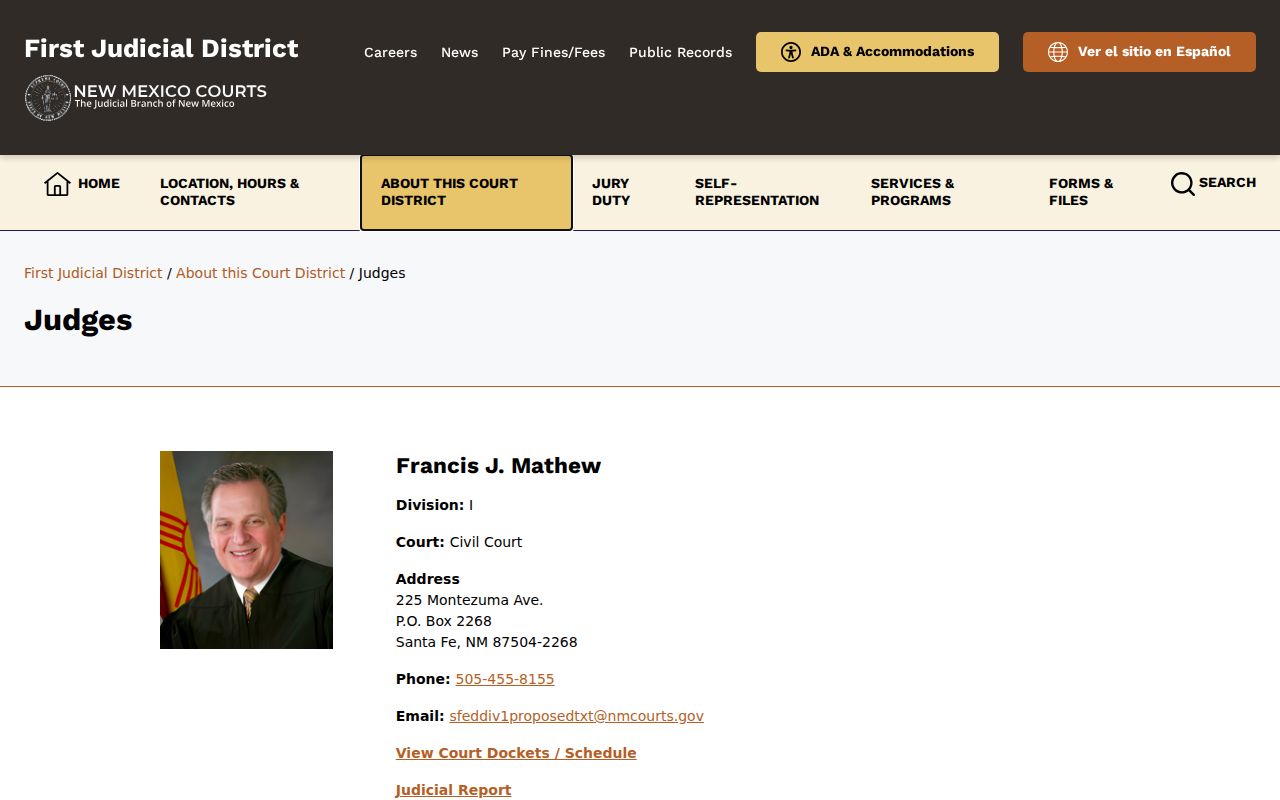
The official divisions display helps you tell a district criminal docket apart from a magistrate or municipal record before repeating a search in the wrong place.
Inside a Santa Fe County Criminal Docket
A docket is a chronological index. It is not a narrative account of the case. In New Mexico, the register of actions can include filed documents, exhibits, transcripts, hearing entries, and docket events. re:SearchNM may show charges, offense dates, statutes, degree, pleas, dispositions, sentences, fines, fees, and conditions. When a field is blank, either the source record lacks it or the viewer’s access is limited.
| Case number | The court identifier. Compare it with the court and case type before opening a record. |
|---|---|
| Charge sequence | May show offense date, charge description, statute, degree, and the most recent event. |
| Hearing | Date, time, hearing type, judge, location, and result when the system displays them. |
| Plea and disposition | Separate fields. A plea is not automatically the final court result. |
| Sentence | May include date, judge, confinement, probation, fees, or conditions when available. |
New Mexico’s guide treats events and filings as searchable docket items. A Print View can preserve a register-of-actions style chronology. A document link, though, may stay hidden. A seal, confidentiality setting, role, relationship, or jurisdiction can block it. Treat a missing PDF as an access question, not proof that no filing was ever made.
Santa Fe County Criminal Result Terms
Criminal records often use closely related words for different steps. Read entries in order. That habit prevents a common mistake. Do not treat the accusation at the start of a Santa Fe County criminal case as the final outcome. The court-entered wording and date beat a shorthand reading of one line.
- Charge
- An allegation listed in the case. It is not a finding of guilt.
- Plea
- A recorded response to a charge, separate from a later disposition or sentence.
- Disposition
- The court’s recorded resolution for a charge or case, which should be read with its date.
- Setting
- A scheduled appearance. It does not show that the hearing was held.
- Related case
- A linked record with its own number and reason. Related does not mean the cases were combined.
Use the case number, status, and date to keep events straight. If the displayed result is unclear, request the register or the relevant order from the court rather than inferring meaning from a partial screen.
How a Criminal Case Moves
Criminal docket entries often follow a recognizable path. Not every case hits every stage, and the same event can happen twice. A magistrate preliminary felony hearing may be just one phase of a matter that later appears under a distinct First Judicial District case number. Read the docket as a dated sequence. It does not predict what comes next.
Docket flow: Filing → Arraignment → Pretrial → Plea or Trial → Disposition → Sentencing
A rescheduled hearing, a motion, or an order can interrupt that flow. Check the latest event and the current setting, then confirm with the court if the record shows a change but no reason.
Santa Fe County Felony Filing Context
How busy is the Santa Fe County criminal docket? Santa Fe County’s Behavioral Health SIM report counted 2,363 felony filings in 2024. The tally runs through December 3. That sits just under the 2,379 felony filings logged in 2023. Go back further and the volume was lighter, with 1,731 felony filings in 2020. Keep one thing in mind here. These are filings, not people, convictions, or outcomes. That is exactly why careful case-number checks matter in a docket this active.
Districtwide numbers need careful labeling. The First Judicial District covers Santa Fe, Rio Arriba, and Los Alamos Counties, so its pending-case figures can never stand in for Santa Fe County alone.
Courts That Hold Criminal Dockets
Where a Santa Fe County criminal docket lives depends on the charge level. Start with First Judicial District Court for a felony. The statewide search routes matter there too. Misdemeanors, DWI or DUI cases, traffic matters, and preliminary felony hearings may put the first docket in Santa Fe Magistrate Court instead. City cases sit elsewhere. Santa Fe, Edgewood, or Española Municipal Court may hold those records. An appeal opens a separate appellate docket, and a federal matter belongs in PACER rather than New Mexico Case Lookup.
The court name printed on a summons, complaint, notice, or older docket line is the strongest starting point. A blank result does not mean nothing was filed. The case may have moved from Magistrate to District Court. It may be municipal, or it may carry restricted access. Check all three before giving up.
Santa Fe County Treatment Court Records
Treatment dockets work differently in Santa Fe County. First Judicial District runs court-supervised programs that generally last at least nine to twelve months. Program information is not a public participant list.
The First Judicial District’s Adult Drug and Treatment Courts page names Adult Drug Court, Adult Treatment Court, and Pretrial Services. Those are the routes it runs. It also covers how program access and eligibility are handled. A criminal docket will not carry a searchable program label for every matter.
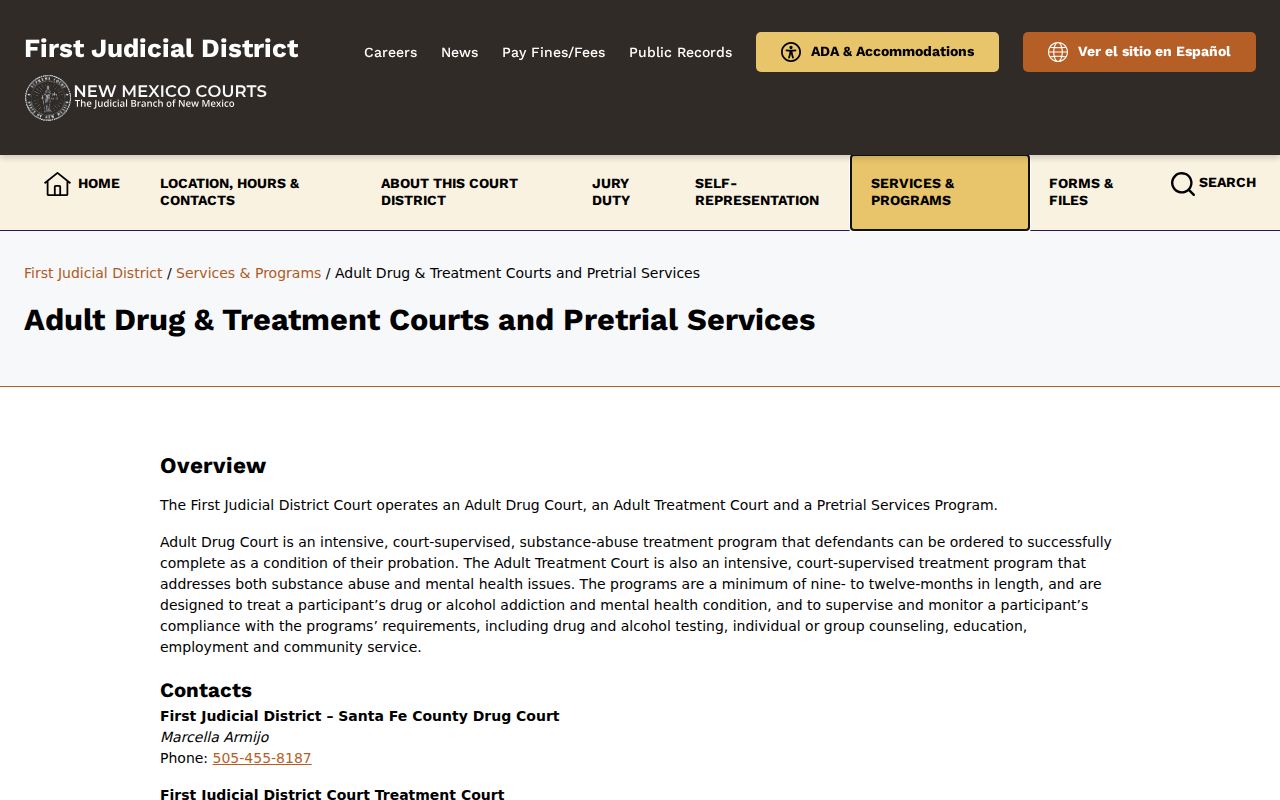
That page is for official program questions only. It is the proper route for access and eligibility. Do not use it to identify participants or to infer confidential treatment facts from a docket entry.
Sealed Dockets and Public Access
Public access to a Santa Fe County criminal docket has hard limits. Juvenile criminal cases stay off online display. So do Family Violence Protection Act protection-order cases. On re:SearchNM, a gavel icon or a missing document can point to sealed, confidential, role-based, relationship-based, or jurisdiction-based limits. The icon never explains itself.
Access rules to check:
Rule 1-079 NMRA treats the docket and register as court records while requiring protection or redaction of specified information.
New Mexico Courts IPRA instructions provide the written-request route when the record is held by a court custodian.
New Mexico criminal forms include orders on motions to seal and unseal, but the forms do not establish whether a particular case is sealed.
The court’s criminal forms resource posts the seal and unseal order forms used in the system.
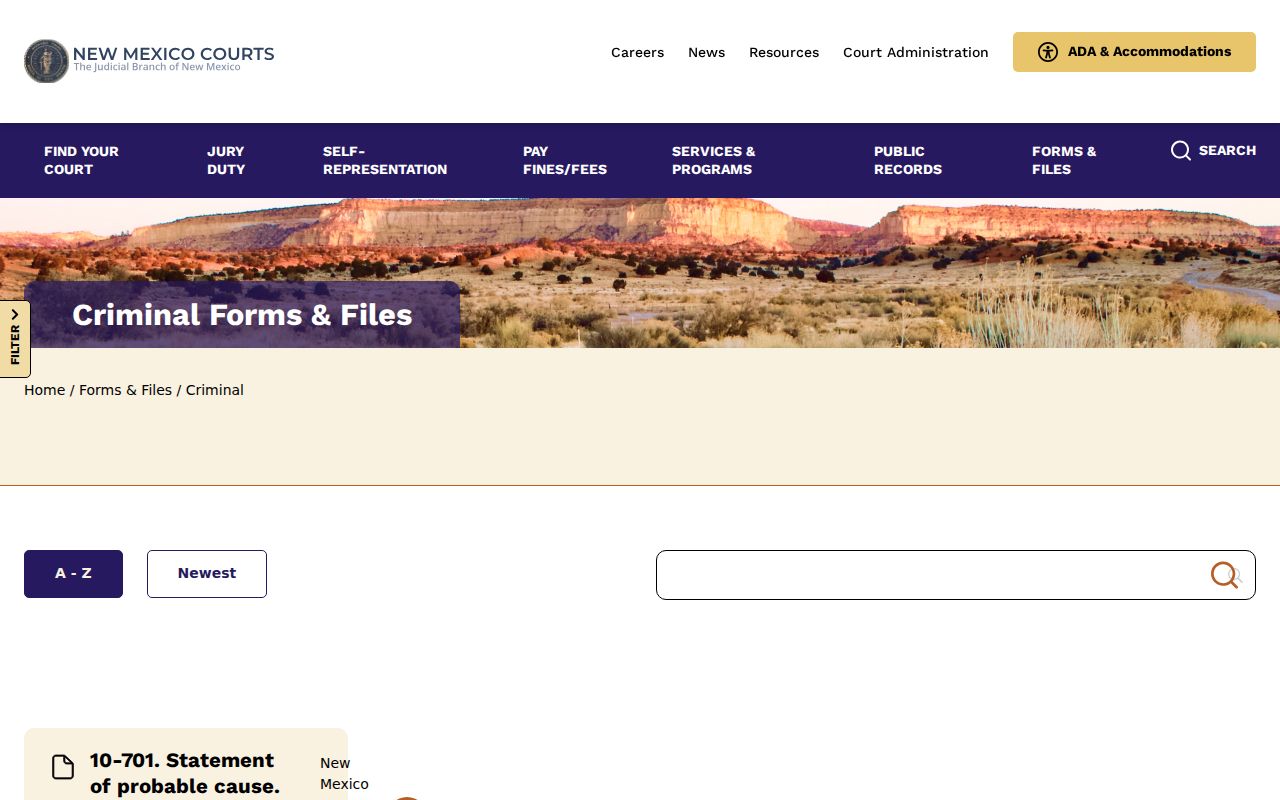
A nonautomatic seal takes a written court order. The rule requires specific findings, so ask the clerk about the right record or order rather than drawing conclusions from a blank result.
Note: Protected identifiers, sealed material, and juvenile information should not be copied from a court record into a search note or public example.
Santa Fe County Criminal Missing-Result Steps
A blank result needs a court-by-court check, not a guess. Confirm the case number, filing date, and court level. Preliminary felony hearings often start in Magistrate Court. The district record may be filed later. A city matter may belong to a municipal court, and juvenile, sealed, expunged, or protected matters may not display through the ordinary public route.
Search the public Case Lookup route next. Add the registered re:SearchNM route for the same court and the same date range when that fits. Still unclear? Call the clerk that maintains the case, or send a reasonably particular request to the court records custodian. Ask for the register, a dated status, or a named document. A blank result is not a dismissal, a conviction, or the end of the case.